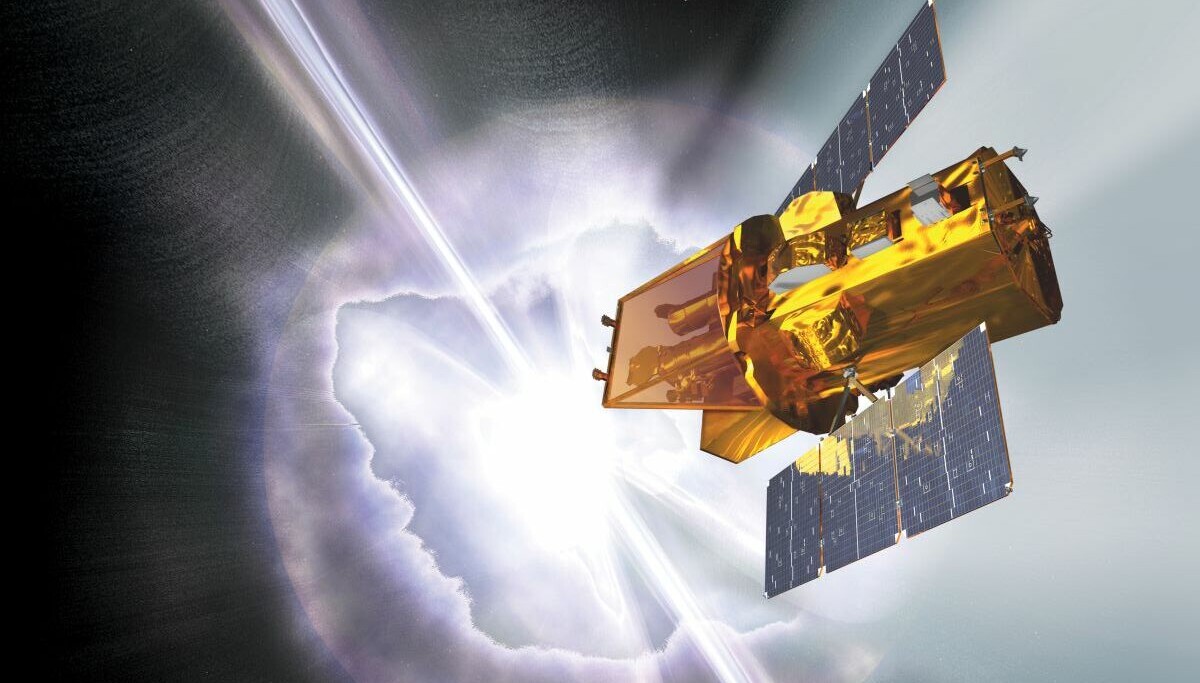
Environmental Testing Concludes at NASA Goddard for Swift Boost Mission
Katalyst Space Technologies has officially completed a series of critical environmental tests at the NASA Goddard Space Flight Center in Greenbelt, Maryland.
The testing phase marks a major milestone for the upcoming Swift-Boost mission, which is designed to extend the life of a vital $500 million space telescope.
The Neil Gehrels Swift Observatory is currently facing a terminal threat as its orbit continues to decay, pulling it closer to a fiery reentry into Earth’s atmosphere.
The High-Stakes Rescue of the Swift Observatory
NASA’s Swift telescope has been a cornerstone of high-energy astrophysics since its launch, but it lacks an onboard propulsion system to maintain its altitude.
Without intervention, the spacecraft is expected to reenter the atmosphere and be destroyed by atmospheric friction within the next few years.
- Spacecraft Name: Neil Gehrels Swift Observatory
- Asset Value: Approximately $500 million
- Current Status: Sinking orbit due to atmospheric drag
- Primary Mission: Detecting gamma-ray bursts and cosmic explosions
The rescue strategy involves a specialized “space tug” developed by Katalyst Space Technologies, which will physically dock with the telescope to provide the necessary thrust.
You can find more information on the complexities of High-Energy Astrophysics Missions to understand why saving this asset is a priority.
Rigorous Testing at Goddard Space Flight Center
The hardware developed by Katalyst underwent a gauntlet of tests at the Goddard facility to ensure it can survive the harsh conditions of launch and space operation.
Engineers subjected the “S0” (S-Zero) refueling and servicing vehicle to intense vibrations that mimic the violent forces experienced during a rocket launch.
- Vibration Testing: Simulating the acoustic and structural stress of lift-off.
- Thermal Vacuum Testing: Placing hardware in a chamber to replicate the extreme temperature swings of the space environment.
- Electromagnetic Interference: Ensuring the electronic systems do not interfere with the telescope or launch vehicle.
These tests are mandatory for any mission intending to interact with high-value Orbital Servicing Operations and satellite life extension.
The S0 Vehicle: A Specialized Satellite Servicer
The Katalyst S0 vehicle is a compact servicing craft engineered specifically for the Swift-Boost mission scheduled for late June 2026.
It utilizes a proprietary docking mechanism designed to grasp the interface ring of the aging Swift satellite without damaging its delicate instruments.
| Feature | Mission Specification |
|---|---|
| Target Launch Date | June 2026 |
| Test Location | NASA Goddard Space Flight Center |
| Mission Partner | Katalyst Space Technologies |
| Primary Objective | Orbital Altitude Restoration |
Once the S0 vehicle is securely attached, its thrusters will fire to raise the Swift observatory’s perigee, effectively pushing it back into a stable orbit.
Critical Timeline for Orbital Correction
Timing is essential for this mission because the telescope’s descent is accelerating as it enters denser layers of the upper atmosphere.
The recent solar cycle has increased atmospheric density, which in turn has increased the “drag” on the Swift satellite, causing it to lose altitude faster than initially predicted.
- Solar Activity Influence: Increased solar flares expand the atmosphere, heightening drag.
- Altitude Loss: Swift is dropping several kilometers per year.
- Point of No Return: If the altitude drops too low, the S0 vehicle may not have enough fuel to reverse the descent.
Successful completion of the Goddard testing confirms that the S0 hardware is flight-ready and capable of meeting the June 2026 launch window.
Impact on Future Space Servicing
The Swift-Boost mission is being watched closely by the international space community as a proof-of-concept for commercial satellite servicing.
If successful, it will demonstrate that legacy satellites—even those never designed for docking—can be rescued and refurbished while in orbit.
This approach could potentially save billions of dollars by extending the lifespan of existing scientific and communications infrastructure rather than launching replacements.
The collaboration between NASA Goddard and private industry illustrates a shift toward sustainable space operations and the mitigation of space debris issues.
Celestial Context: Monitoring the Skies
While NASA engineers work to save the telescope from its atmospheric fate, the observatory continues its daily mission of monitoring the heavens.
As of May 15, 2026, astronomical conditions remain a factor for ground-based support and observations related to the mission’s logistics.
- Moon Phase: Waning Crescent
- Illumination: Approximately 1%
- Moonrise: 4:18 AM
- Moonset: 6:42 PM
These lighting conditions are often monitored for optical tracking of satellites as they pass over ground stations during critical mission phases.
The successful test at Goddard ensures that the “racing against time” narrative for the Swift telescope now has a viable path toward a successful rescue in the coming month.