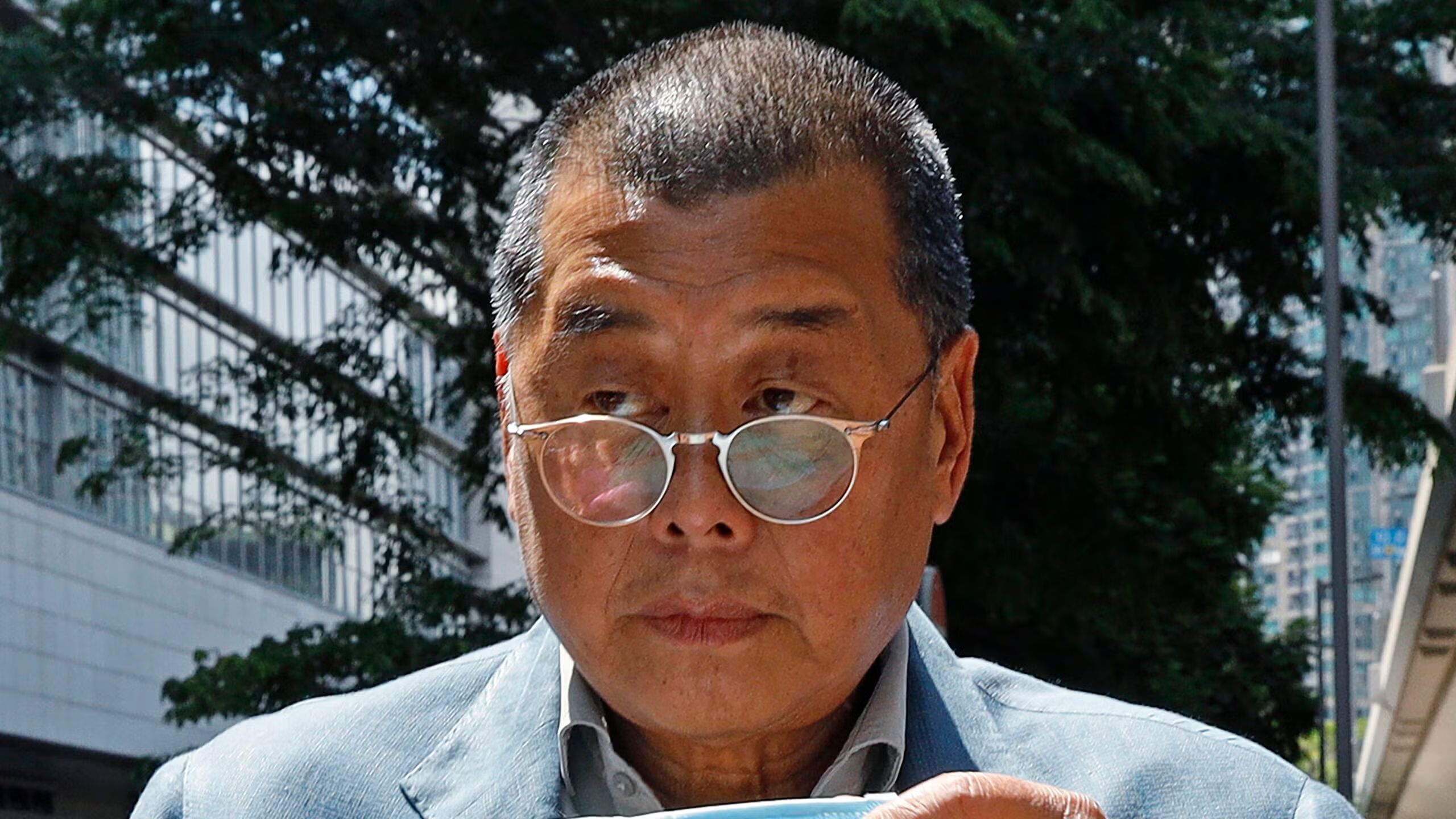
Senate Passes Bipartisan Resolution Urging Release of Political Prisoners in China
The United States Senate has officially passed a bipartisan resolution urging the immediate release of several political prisoners currently detained in China.
The resolution was led by U.S. Senators Ted Cruz (R-Texas) and Dick Durbin (D-Ill.), highlighting a unified front in Washington regarding international human rights.
This legislative action specifically calls on the U.S. President to prioritize the security and freedom of these individuals during high-level diplomatic engagements.
The resolution names several high-profile detainees, emphasizing the urgency of their situations as diplomatic discussions continue between the two nations.
Key Figures Named in the Senate Resolution
The bipartisan measure identifies specific individuals who the Senate believes are being wrongfully detained by the Chinese Communist Party (CCP).
- Jimmy Lai: A prominent pro-democracy advocate and media mogul from Hong Kong.
- Dr. Gulshan Abbas: A retired medical professional and advocate for human rights.
- Pastor Jin Mingri: A religious leader associated with the Zion Church.
- Pastor Gao Quanfu and Pang Yu: A religious leader and his wife who have been targeted by authorities.
- Ekpar Asat: A tech entrepreneur and social activist.
Senator Durbin stated that no individual should suffer political imprisonment for standing up for democracy and the protection of fundamental freedoms.
Bipartisan Statements from U.S. Leadership
Following the passage of the resolution, both Senator Cruz and Senator Durbin issued formal statements regarding the necessity of holding the CCP accountable.
Senator Cruz described the Chinese Communist Party as an authoritarian regime that actively silences religious believers and jails dissidents.
He noted that the Senate’s passage of this resolution underscores America’s commitment to fighting for those wrongfully detained abroad.
Senator Durbin acknowledged that while Chinese authorities have worked with his office on past cases, immediate action is required for the current list of detainees.
He specifically urged the President to raise these individual cases directly with Chinese President Xi Jinping during ongoing official visits.
Historical Context and Previous Legislative Actions
This is not the first time the U.S. Senate has taken a stand against the detention of religious and political figures in China.
In November 2025, a previous resolution led by Senators Cruz and Chris Coons (D-Del.) was passed to condemn the CCP for the abduction of Pastor Ezra Jin.
That resolution also called for the release of other leaders from the Zion Church, highlighting a pattern of religious suppression noted by the U.S. government.
Senator Cruz has a history of personal engagement with these issues, having traveled to Hong Kong in 2019 to support pro-democracy protesters.
During that visit, Cruz met with international human rights defenders and pro-democracy dissidents, including Jimmy Lai.
Summary of Detainee Information
The resolution provides a focused list of individuals whose release is considered a priority for the U.S. Senate.
| Name | Background / Affiliation | Focus of Concern |
|---|---|---|
| Jimmy Lai | Hong Kong Media & Democracy | Freedom of Press |
| Dr. Gulshan Abbas | Medical Professional | Wrongful Detention |
| Jin Mingri | Zion Church Pastor | Religious Freedom |
| Gao Quanfu | Religious Leader | Political Suppression |
The Senate resolution serves as a formal stance of the U.S. government, signaling that the treatment of these prisoners remains a significant hurdle in bilateral relations.
The bipartisan nature of the vote indicates that support for these individuals spans across both major political parties in the United States.
Supporters of the resolution argue that these “important gestures” by China must be followed by the tangible release of all named political prisoners.
The passage of the resolution in Washington, D.C. emphasizes that the Senate will continue to monitor the status of dissidents and religious leaders in the region.
The ongoing diplomatic visit by the U.S. President provides a critical window for these concerns to be addressed at the highest levels of government.


