Treasury Yields Surge to One-Year Highs
U.S. Treasury yields moved sharply higher on Friday morning as borrowing costs across the curve climbed toward levels not seen since mid-2025.
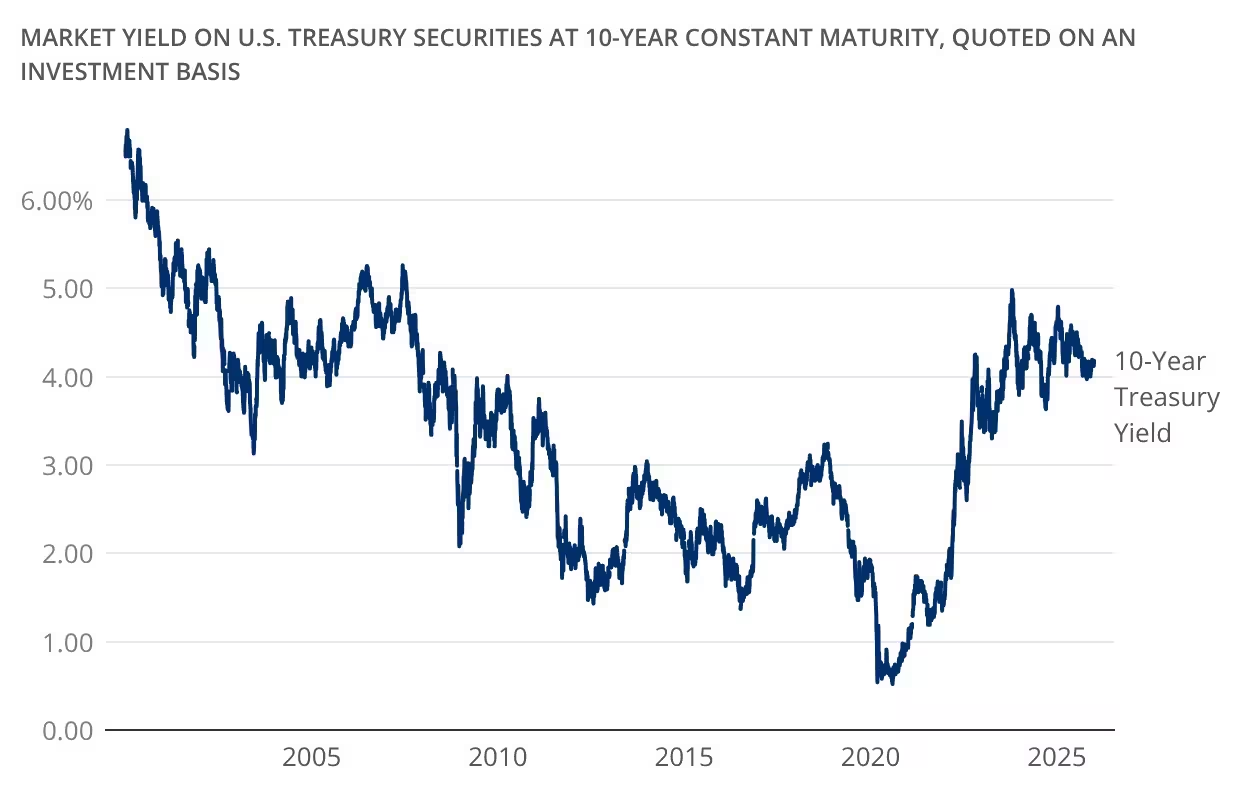
The 10-year Treasury yield, a critical benchmark for global borrowing, rose significantly to reach 4.56%, marking its highest point in approximately 12 months.
This aggressive move in the bond market comes as investors grapple with a combination of persistent inflation data and a sharp spike in global energy prices.
Market participants are now pricing in a “higher-for-longer” interest rate environment as the Federal Reserve’s path toward potential rate cuts becomes increasingly clouded.
Key Yield Benchmarks and Market Movement
The sell-off in government bonds was widespread, affecting both short-term and long-term maturities as prices fell and yields inverseley rose.
- 10-Year Treasury Yield: Surged to 4.56%, the highest level since May 2025.
- 2-Year Treasury Yield: Climbed above 5.00% as traders adjusted expectations for Fed policy.
- 30-Year Treasury Bond: Yields moved toward 4.70% amid long-term inflation concerns.
- Yield Curve Status: Remained deeply inverted, a historical signal of potential economic headwinds.
The sudden move toward global bond market highs has sent ripples through the broader financial system, impacting mortgage rates and corporate lending.
Inflation Fears Grip Wall Street
The primary catalyst for the surge is a growing realization that inflation is proving more stubborn than previously forecasted by economists and policymakers.
Recent Consumer Price Index (CPI) and Producer Price Index (PPI) data points have consistently landed above expectations, signaling that price pressures remain entrenched.
Investors are concerned that the Federal Reserve may be forced to maintain restrictive monetary policy deep into 2026 to bring inflation back to its 2% target.
Wall Street’s “fear gauge” or volatility index has seen an uptick as the certainty of a summer rate cut evaporates from the futures market.
Impact of Rising Oil Prices
Energy costs have added significant fuel to the inflationary fire, with crude oil prices seeing a sustained rally over the past several weeks.
Higher oil prices contribute directly to transportation costs and manufacturing expenses, creating a “second-round effect” on consumer goods.
This energy-driven inflation is particularly concerning for the bond market because it is largely outside the direct control of central bank interest rate hikes.
Market analysts note that as long as energy remains elevated, the 10-year Treasury yield will likely face continued upward pressure.
Equity Markets React to Rising Rates
The spike in yields has put immediate pressure on the U.S. stock market, particularly high-growth technology sectors that are sensitive to borrowing costs.
The Dow Jones Industrial Average and the S&P 500 both recorded slides of up to 1.5% in early trading sessions following the yield breakout.
| Index | Performance Impact | Primary Concern |
|---|---|---|
| S&P 500 | Down 1.2% | Valuation compression due to higher discount rates. |
| Nasdaq Composite | Down 1.8% | Impact on tech sector future earnings growth. |
| Dow Jones | Down 0.9% | Increased debt servicing costs for industrial firms. |
Investors are rotating out of riskier assets and into the safety of cash equivalents as the US financial markets adjust to the new yield reality.
The Federal Reserve’s Policy Dilemma
The central bank is now in a difficult position as it balances the need to cool inflation without triggering a significant economic slowdown.
Federal Reserve officials have recently signaled that they are in no rush to lower rates until they have “greater confidence” that inflation is on a sustainable downward path.
- Hawkish Tone: Recent speeches from Fed governors suggest a willingness to hike again if necessary.
- Data Dependency: The central bank remains hyper-focused on incoming labor market and price data.
- Quantitative Tightening: The reduction of the Fed’s balance sheet continues to remove liquidity from the system.
This “higher-for-longer” stance is being reflected in the 10-year yield, which serves as a proxy for long-term economic growth and inflation expectations.
Technical Analysis of the 4.50% Level
Technically, the 4.50% level on the 10-year Treasury had been viewed as a major psychological and technical resistance point for several months.
Breaking above this level suggests that the market is entering a new phase of price discovery, where 5.00% could become the next target for bears.
Institutional bond traders reported a heavy volume of selling orders once the yield breached its 200-day moving average early Friday.
The velocity of the move caught many short-sellers off guard, leading to a “short squeeze” that further accelerated the rise in yields.
Future Outlook for Borrowing Costs
For consumers, the surge in the 10-year yield translates directly into higher costs for home mortgages and auto loans.
The average 30-year fixed mortgage rate is expected to track this move, potentially climbing back toward the 8% mark if yields remain at these levels.
Corporations looking to refinance existing debt are facing significantly higher coupon rates, which could eat into profit margins in the coming quarters.
Economists warn that if the 10-year Treasury yield remains above 4.5% for an extended period, it could lead to a cooling of the housing market and a reduction in capital expenditures.
As the market heads into the next week, all eyes will be on upcoming economic releases to see if the inflation narrative continues to dominate the bond landscape.