A Growing Seismic Threat Along the West Coast
Seismologists and researchers have issued a stern warning regarding the potential for a catastrophic seismic event that could reshape the Western United States.
A comprehensive new study conducted by researchers at Oregon State University has identified a critical connection between two of the region’s most dangerous fault lines.
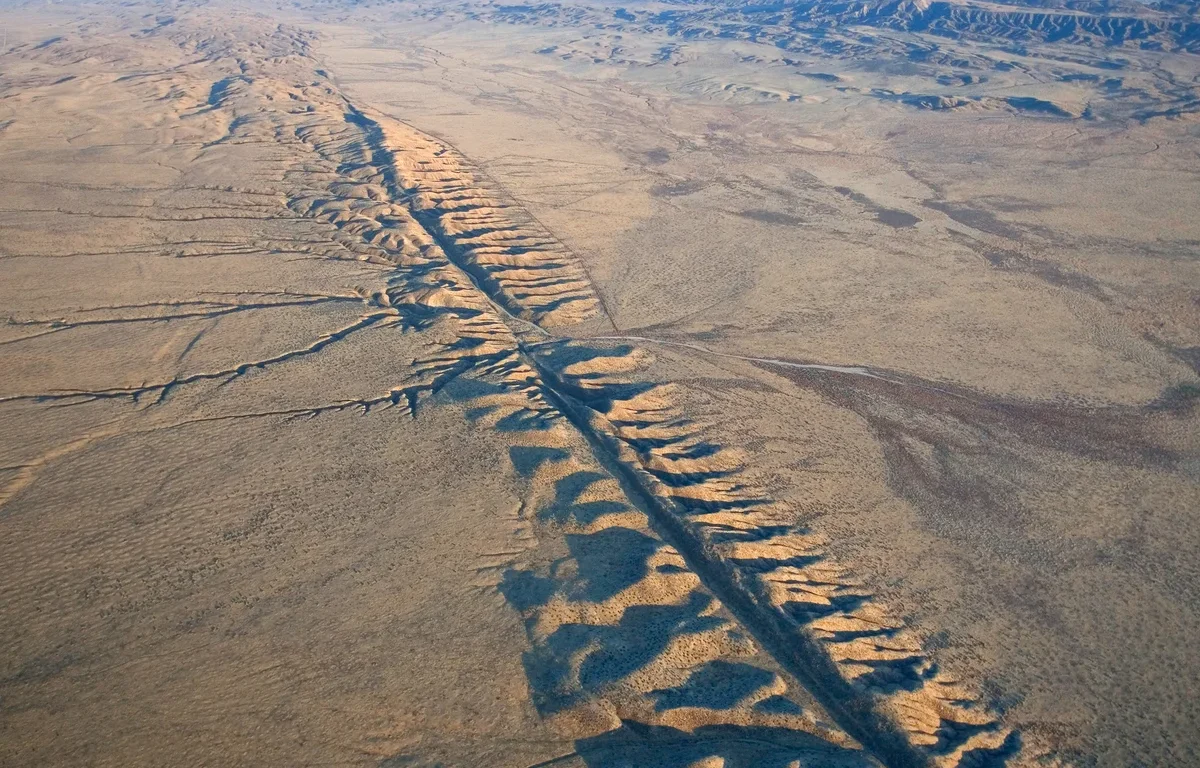
The research suggests that a rupture on the San Andreas Fault could potentially trigger a simultaneous event on the Cascadia Subduction Zone.
This “double-event” scenario would result in a multi-state emergency, impacting millions of residents from Northern California through British Columbia.
Understanding the Cascade Effect
For decades, experts viewed the San Andreas Fault and the Cascadia Subduction Zone as independent systems with little influence on one another.
The new findings challenge this long-held assumption by providing evidence of geological synchronization during past major earthquakes.
- Geological Linkage: Historical data indicates that major ruptures on one fault have frequently preceded activity on the other.
- Seismic Synchronization: The study found that nearly half of the major earthquakes on the Cascadia Subduction Zone occurred shortly after a San Andreas rupture.
- Pressure Transfer: Stress from a San Andreas Fault movement can migrate northward, destabilizing the Cascadia region.
The Scale of Potential Destruction
The “Big One” refers to a hypothetical earthquake of magnitude 8.0 or higher that is overdue to occur along the San Andreas line.
However, the inclusion of the Cascadia Subduction Zone into this disaster model significantly increases the projected damage and life-threatening conditions.
Unlike the San Andreas, which is a transform fault, the Cascadia Subduction Zone is capable of producing “megathrust” earthquakes reaching magnitude 9.0.
A magnitude 9.0 event is roughly 30 times more powerful than the largest expected earthquake on the San Andreas Fault alone.
Impact on Infrastructure and Emergency Services
A synchronized rupture would likely overwhelm local and state emergency response teams across multiple borders simultaneously.
State officials are concerned that the shared infrastructure connecting California, Oregon, and Washington could be severed in minutes.
- Transportation Collapse: Major highways, including Interstate 5, could face significant structural failures or closures.
- Utility Disruptions: Power grids and water systems are expected to face widespread outages lasting weeks or months.
- Tsunami Risks: A Cascadia rupture would trigger massive tsunamis, threatening coastal communities with waves reaching 100 feet.
Scientific Methods Behind the Study
Researchers at Oregon State University utilized advanced core sampling and sediment analysis to reach these conclusions.
By examining turbidites—underwater landslides caused by seismic shaking—scientists mapped out the history of earthquakes over the last 10,000 years.
This geological record revealed a pattern of “triggered” events that had previously gone unnoticed in shorter-term historical records.
The data suggests that the southern portion of the Cascadia Subduction Zone is particularly sensitive to movements occurring on the San Andreas Fault.
Preparedness and Risk Mitigation
Federal and state agencies are being urged to update their emergency response frameworks to account for this multi-state disaster scenario.
Individual preparedness remains the primary defense for residents living within the high-risk zones of the West Coast.
Experts recommend that households maintain at least two weeks of supplies, as Earthquake Warning systems may only provide seconds of notice.
The study highlights that the probability of these events occurring within our lifetime is significantly higher than previously estimated.
Comparison of Seismic Zones
| Feature | San Andreas Fault | Cascadia Subduction Zone |
|---|---|---|
| Type of Fault | Transform (Strike-Slip) | Subduction (Megathrust) |
| Maximum Magnitude | Approx. 8.2 | Approx. 9.2 |
| Primary Threat | Ground Shaking | Shaking and Tsunamis |
| Location | California | California to British Columbia |
A Call for Policy Changes
The Oregon State University study serves as a wake-up call for urban planners and civil engineers across the Pacific Northwest.
Building codes in older cities may not be sufficient to withstand the prolonged shaking associated with a magnitude 9.0 megathrust event.
Retrofitting critical infrastructure, such as hospitals and bridges, has become a top priority for state legislators following these findings.
The interconnected nature of these faults means that a disaster in Los Angeles could lead to a catastrophe in Seattle or Portland within hours or days.
Ongoing monitoring of the San Andreas Fault is now considered essential for early warning efforts in the Cascadia region.
Scientists continue to deploy underwater sensors to better understand the real-time stress levels building along these geological boundaries.
This research underscores the necessity of viewing the West Coast as a single, linked seismic environment rather than a series of isolated zones.
The “Big One” may no longer be a localized California problem, but a regional event of unprecedented proportions.